
MATERIAL SELECTION AND BEST-FIT USES

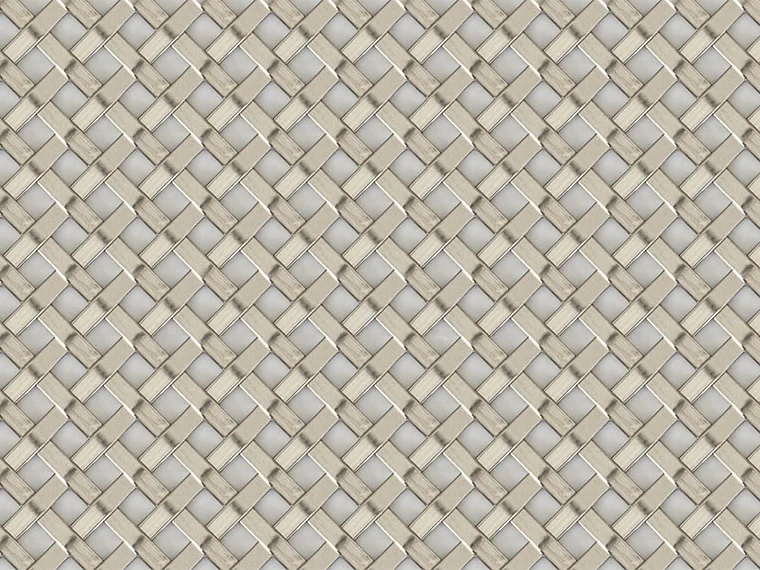

DECORATIVE WIRE MESH
Stainless Steel Decorative Mesh
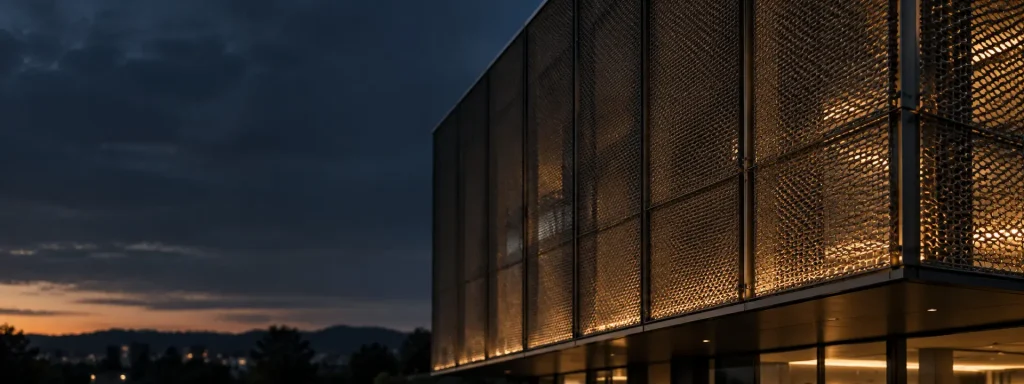
Stainless steel decorative mesh combines architectural texture with practical corrosion resistance for interior and exterior screens, facades, ceilings and custom metal features.
304, 304L, 316 and 316L optionsCorrosion-resistant architectural textureSpecifications confirmed from drawingsRegular production with project-specific pattern and finish confirmation.
PRODUCT OVERVIEW
Stainless Steel Decorative Mesh for Durable Architectural Surfaces
Stainless steel combines a clean silver-grey appearance with useful strength and corrosion resistance. Grade 304 suits many general interior and exterior projects, while 316 or 316L is the stronger starting point for humid, chloride-exposed or coastal locations.
Compared with aluminum, stainless steel offers greater stiffness, abrasion resistance and long-term durability. It is the preferred choice when the mesh must retain a precise architectural finish under regular handling or weather exposure.
Why Specify Stainless Steel Decorative Mesh?
Stainless steel combines a clean silver-grey appearance with useful strength and corrosion resistance. Grade 304 suits many general interior and exterior projects, while 316 or 316L is the stronger starting point for humid, chloride-exposed or coastal locations. Compared with aluminum, stainless steel offers greater stiffness, abrasion resistance and long-term durability. It is the preferred choice when the mesh must retain a precise architectural finish under regular handling or weather exposure. It is heavier and more expensive than aluminum. High-salt environments require careful grade selection, and brushed or mirror-polished surfaces can show scratches, fingerprints and inconsistent reflection if handling and cleaning are not planned. Facades, partitions, ceilings, elevator finishes, railing infill and commercial interiors that need a durable metallic surface. It is not the lowest-weight option for large suspended panels, and an unreviewed 304 grade should not be treated as a universal coastal solution. Choose aluminum where low weight and colour flexibility are more important. Use 316 or 316L instead of 304 where chloride exposure is significant, and review special alloys when the environment exceeds standard stainless-steel capability.
SPECIFICATIONS AND CUSTOM RANGE
Specifications, Processing and Procurement
The values below are a typical production range for inquiry planning, not guaranteed limits. Final specifications must be confirmed before production and remain subject to material availability, tooling and drawing review.
Production is checked against the approved drawing.
| Material and Grade | 304, 304L, 316 and 316L. 201, 430 or duplex grades are available on request after project review. |
|---|---|
| Typical Production Range | Pattern geometry varies widely. Wire, flat-wire or cable dimensions, aperture and open area are confirmed from the selected pattern, sample number or drawing. |
| Size Guidance | Typical panel or roll width is approximately 0.6–2.0 m. Wider formats are subject to pattern stability, tension, framing and transport review. |
| Surface Options | Natural, brushed, polished, powder coated, PVD or PVDF, subject to grade, construction and sample approval. |
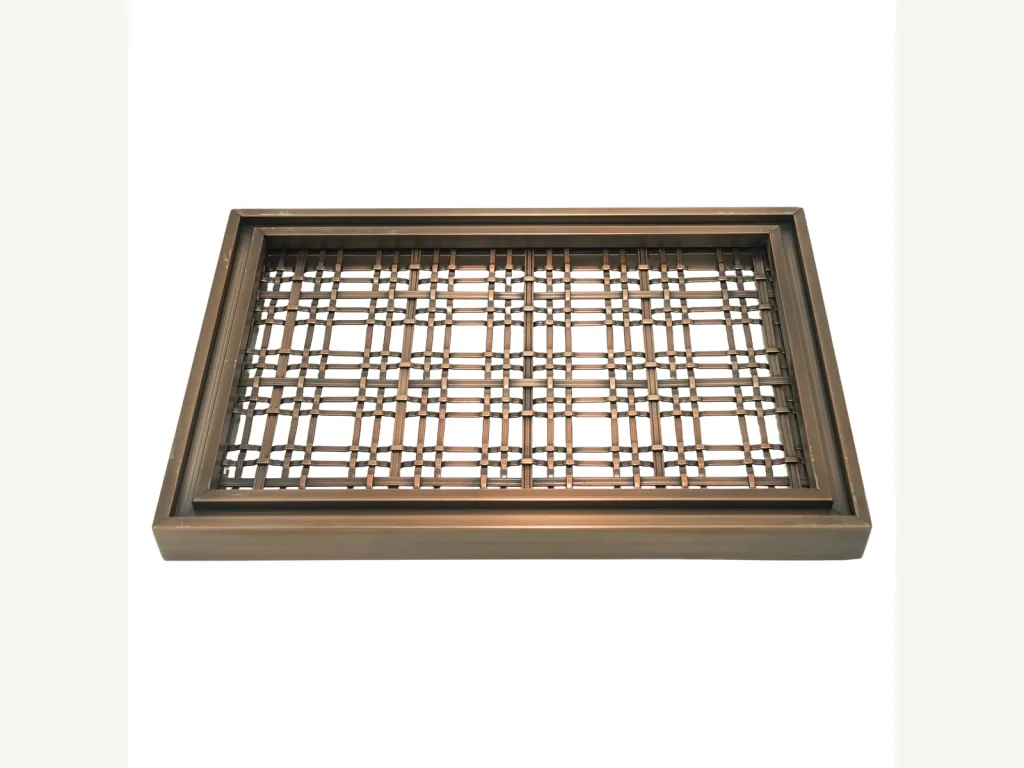
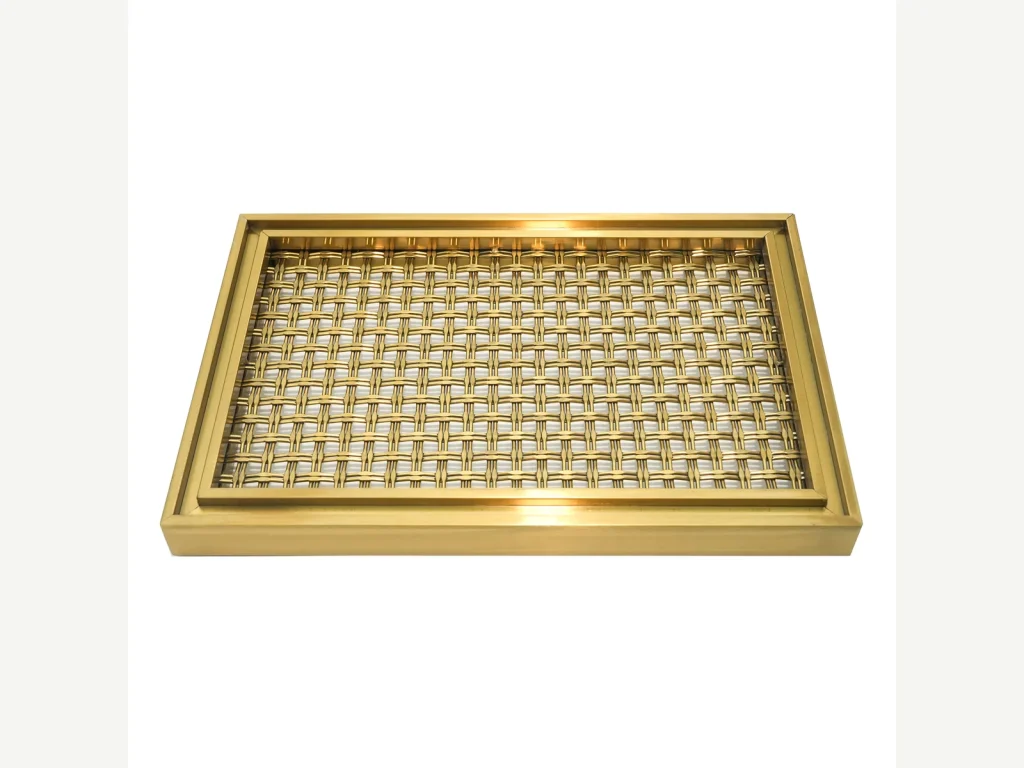
| Structure, Weave or Opening | Rigid woven, crimped woven, cable, spiral and custom combined constructions. |
| MOQ Guidance | Samples or small batches can be quoted. Project MOQ depends on pattern, raw material and surface-treatment batch. |
| Stock Guidance | Common stainless raw material may be available, but finished decorative patterns are normally produced to order. |
| Supply Type | Regular production with project-specific pattern and finish confirmation. |

FREQUENTLY ASKED QUESTIONS
Stainless Steel Decorative Mesh FAQ
Material, specification and commercial details are confirmed for the actual project.
Why choose Stainless Steel Decorative Mesh?
Stainless steel combines a clean silver-grey appearance with useful strength and corrosion resistance. Grade 304 suits many general interior and exterior projects, while 316 or 316L is the stronger starting point for humid, chloride-exposed or coastal locations.
When should 316 or 316L be selected instead of 304?
It is heavier and more expensive than aluminum. High-salt environments require careful grade selection, and brushed or mirror-polished surfaces can show scratches, fingerprints and inconsistent reflection if handling and cleaning are not planned. Choose aluminum where low weight and colour flexibility are more important. Use 316 or 316L instead of 304 where chloride exposure is significant, and review special alloys when the environment exceeds standard stainless-steel capability.
Which projects are the best fit for Stainless Steel Decorative Mesh?
Facades, partitions, ceilings, elevator finishes, railing infill and commercial interiors that need a durable metallic surface. It is not the lowest-weight option for large suspended panels, and an unreviewed 304 grade should not be treated as a universal coastal solution.
What information is required for a quotation?
Provide material grade, pattern or sample reference, wire or cable dimensions, aperture or open area, panel or roll size, edge or frame details, finish, quantity and service environment.
How are MOQ and stock confirmed?
Samples or small batches can be quoted. Project MOQ depends on pattern, raw material and surface-treatment batch. Common stainless raw material may be available, but finished decorative patterns are normally produced to order. Final availability and commercial terms are confirmed in the quotation.
LET’S WORK TOGETHER
Send Us Your Stainless Steel Mesh Requirements
Share the required grade, pattern, dimensions, finish, quantity and service environment for project review.